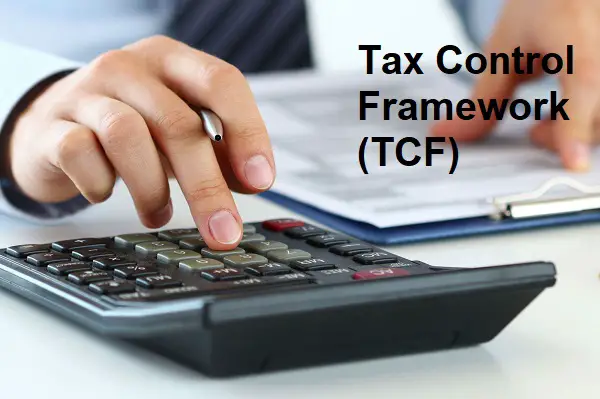
The Tax Control Framework is a concept that is integrated with good corporate governance or good corporate governance. The tax control framework, or commonly abbreviated as TCF, is a framework that ensures that corporate tax reporting submitted in SPT is true, appropriate, accurate, and accountable. In essence, corporate accountability in tax matters is guaranteed and can be trusted. So indeed the TCF concept is part of good corporate governance in order to achieve quality companies that have good corporate governance standards.
Managing the taxes of a company, especially a company with a large scale, is certainly not as simple as managing individual taxes. There are so many aspects of a company that can contain taxes. Therefore, a company must have a legal department that takes care of this problem, or if not, will hire a competent tax consultant. However, in good corporate governance, issues regarding tax potential and risk within a company must be well managed internally so that when a company’s SPT is reported, it is certain that the contents will be accurate.
The TCF concept itself has not become something that is mandatory in Indonesia. Usually, the tax control framework is only limited to being carried out by companies with a large scale and multinational scope, especially for companies wishing to expand to other countries, because there may be regulations that require these companies to have a TCF system in their company’s internal management.
The application of TCF in a company can also be said to be unique, because every company is different. The problem is, the implementation of TCF is indeed related to the company’s internal controls, which will certainly be different in each company. So, there is no exact technical guide on the TCF concept. It’s just that, as a guide, there are 6 basic principles that companies must have to implement TCF, including:
* Implementation of tax strategy. The company’s tax strategy must be clear, because this will determine the steps taken in managing tax risk. Generally, the board of directors and company officials must know about this tax strategy.
* Comprehensively done. The implementation of TCF must be carried out in every line and aspect of the company. This needs to be done to avoid missing tax objects and risks from every company activity and transaction.
* Division of responsibilities. Each party and division in the company must understand their responsibilities in contributing to tax reporting and corporate tax risk management, so that those who manage taxes, be it the legal division or tax consultants, are sure to get accurate data and input.
* Well documented. All matters relating to tax affairs must be properly documented so that they can be used when needed.
* Testing. The implementation of TCF in a company must be tested as a monitoring process and to ensure the system runs smoothly. This can be done internally or by the tax authorities.
* Guarantee. There must be something that guarantees that the contents of the company’s tax report are in accordance with reality.
The Tax Control Framework (TCF) is a framework that supports tax risk management and compliance in taxation, including tax strategy, company policy in the field of taxation, how tax operates in the company’s business, and the company’s roles and responsibilities in taxation.
At present, tax is a complex matter, and has a big impact on companies so that tax responsibility is no longer sufficiently left to the back office. Taxation must be managed holistically involving various stakeholders within the company. Compliance in taxation is part of good governance, and good governance itself requires companies to manage taxes in a transparent and accountable manner.
As a good company, it is supposed to apply credible management, including in tax matters. Because if proper handling is not carried out, it can have an impact on the amount of tax that is not appropriate in the sense that it is too large. Conversely, without a good famework tax control framework, it can also have an impact on tax reports and payments that are not in accordance with government regulations. If that happens, it can be troublesome if during an audit there is a finding of tax fraud or tax discrepancies which can be detrimental because the company will be subject to a strong warning from the government and even large fines. Because of that, famework tax control is an important instrument so that taxes can be managed professionally and responsibly.
The advantages of TCF are:
1 Helping companies manage taxes effectively and efficiently, thereby reducing tax risk and minimizing tax costs to be paid.
2 Ensuring that the taxes paid by the company comply with applicable regulations, so as to avoid legal action that may arise from violations of tax regulations.
3 Providing a clear and structured framework for managing taxes, so as to facilitate companies in managing their tax activities regularly and effectively.
4 Assist the company in creating a good image in the eyes of investors and the public, because the company is seen to comply with applicable regulations and is fiscally responsible.
The disadvantages of TCF are:
1 It can be expensive for companies to implement TCF, especially if the company has to hire a tax consultant or buy special software to manage its taxes.
2 TCF can be complex and take a significant amount of time to implement, especially if the company has to adjust to new or changing tax regulations.
3 Not all companies can easily adopt TCF, especially if the company has a complex financial structure or fast-paced and dynamic operations.
4 TCF can only provide limited protection for companies against tax risk, especially if the company does not implement it properly or does not monitor and evaluate its tax performance regularly.
A company that has good internal control and implements TCF is a wise company because it contributes to the success of state revenues from taxes. The implementation of the TCF concept is still difficult to apply evenly across various industrial scales. But at least TCF helps companies to focus more on their operations because it is certain that they will avoid risks and tax problems in the future.