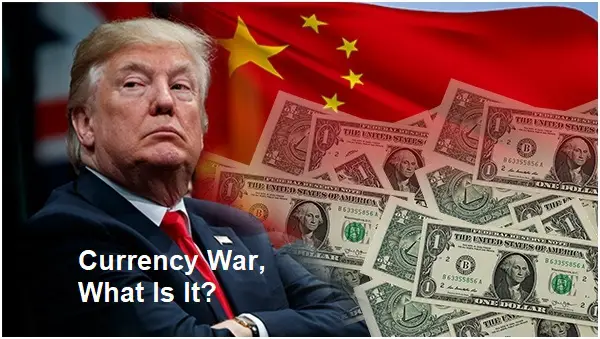
Currency is an important element in a country’s economic activities. Currency values are greatly affected by factors such as inflation, interest rates, and overall economic conditions. However, sometimes countries may also compete to maintain the value of their currencies in what are known as currency wars.
A currency war is a situation where countries compete with each other to maintain or reduce the value of their currency against other countries’ currencies. This can be done in various ways, such as using foreign exchange market intervention or changing interest rates. Currency wars can occur for many reasons, such as attempts to increase exports or reduce imports, or to control inflation.
Currency wars can have a significant impact on a country’s economy, both positive and negative. However, not all countries can engage in currency wars, as several factors limit their ability to do so.
Currency wars are a complex and important topic for the global economy. In this article, we’ll explore the history of currency wars, their impact on the economies of the countries involved, and how to deal with them.
History of Currency Wars
Currency wars are not a new phenomenon in world economic history. Since the 4th century BC, nations have competed to maintain the value of their currency by a method known as “debasement”, namely by increasing the amount of precious metal in the currency issued. This is done so that the value of the currency becomes lower and is easily accepted by other people as a means of payment.
In the 20th century, currency wars broke out massively in the years following World War II. At that time, many countries were trying to maintain the value of their currency by using foreign exchange market intervention or changing interest rates. This happened because many countries wanted to increase their exports and reduce imports, as well as control inflation caused by the economic recovery after the war.
In the modern era, currency wars still occur in the same way, although there are some differences from the previous era. Countries can still use foreign exchange market intervention or change interest rates to preserve the value of their currencies, but there are also other ways this can be done, such as issuing bonds or using financial derivatives to affect currency values.
Although currency wars still occur today, there are several factors that limit the ability of countries to engage in currency wars. For example, a country with a high inflation rate or high debt level may not be able to engage in a currency war because it does not have sufficient financial strength. In addition, there are also several international agreements that prevent countries from engaging in currency wars, such as the Bretton Woods Agreement in 1944.
Impact of Currency Wars
Currency wars can have a significant impact on a country’s economy, both positive and negative. One of the main impacts is on currency values. If a country manages to maintain the value of its currency in a way that is called “currency appreciation”, then the value of the currency will increase against other countries’ currencies. This can help increase the country’s exports and reduce imports, thus increasing the trade surplus.
However, if a country fails in its efforts to maintain the value of its currency and a “currency depreciation” occurs, then the value of that currency will decrease against other countries’ currencies. This can cause the country’s exports to become more expensive for other countries, thereby reducing the demand for the country’s export products. In addition, the country’s imports will also become cheaper, thus increasing the demand for imported products from other countries. This can cause the country’s trade deficit.
In addition to the impact on currency values, currency wars can also have other effects on the economies of the countries involved. For example, if a country tries to preserve the value of its currency by increasing interest rates, this can cause the country’s economic growth to slow down because high interest rates can limit the credit available to companies and individuals. In addition, currency wars can also cause high volatility in the foreign exchange market, which can affect investor confidence and cause financial losses for the country.
How to Deal with Currency Wars
Because currency wars have a significant impact on a country’s economy, either positively or negatively. So the countries involved in a currency war must consider various steps that can be taken to deal with the war. Here are some steps that are usually taken by the countries involved, either to minimize the risk of defeat or to try to calm the war:
1 Foreign exchange market intervention: Countries can use foreign exchange market intervention to maintain the value of their currency. This intervention is carried out by selling or buying foreign currency with the aim of influencing the value of the domestic currency.
2 Changing interest rates: Countries can change interest rates to preserve the value of their currency. High interest rates can attract investors to buy the country’s bonds, which will increase the demand for domestic currency. Conversely, low interest rates can reduce the demand for domestic currency.
3 Using financial derivatives: Countries can use financial derivatives, such as currency options or currency futures, to affect the value of the domestic currency.
4 Issuing bonds: Countries can issue bonds to increase the demand for domestic currency. This is done by selling bonds to investors, who will buy these bonds in domestic currency.
5 Adopt consistent fiscal and monetary policies: Countries can maintain currency stability by implementing consistent fiscal and monetary policies. Consistent policies can increase investor confidence and reduce volatility in the foreign exchange market.